April 16, 2026

Article by
Eric Chenail - Digital lead
The Hub B2B: An indispensable tool for your sales
Your sales tools aren’t working together. Your sales team already knows it.
The CRM is in place. So is the CMS. The shared drive is set up. The email tool works. On paper, the infrastructure exists.
In reality, a rep managing hundreds of SKUs across a dozen distribution networks is jumping between four systems before every meeting. They copy-paste product data, reformat a presentation in PowerPoint, manually check if prices are still current. Meanwhile, marketing receives yet another urgent request for a custom sheet, and the team that should be thinking strategy spends its week producing documents one by one.
According to Salesforce, 60% of a B2B rep’s time is spent on tasks that aren’t selling. Not because people are disorganized. Because the tools aren’t designed to work together.
(Salesforce, State of Sales, 7th ed., 2025)
Every tool does its job. None of them do yours.
Sounds interesting? → Let’s talk today!
The usual answer is to add. One more tool, one more template, one more training.
The majority of B2B salespeople don’t use the materials made available to them, because they’re outdated, hard to customize, or disconnected from what they actually experience in the field.
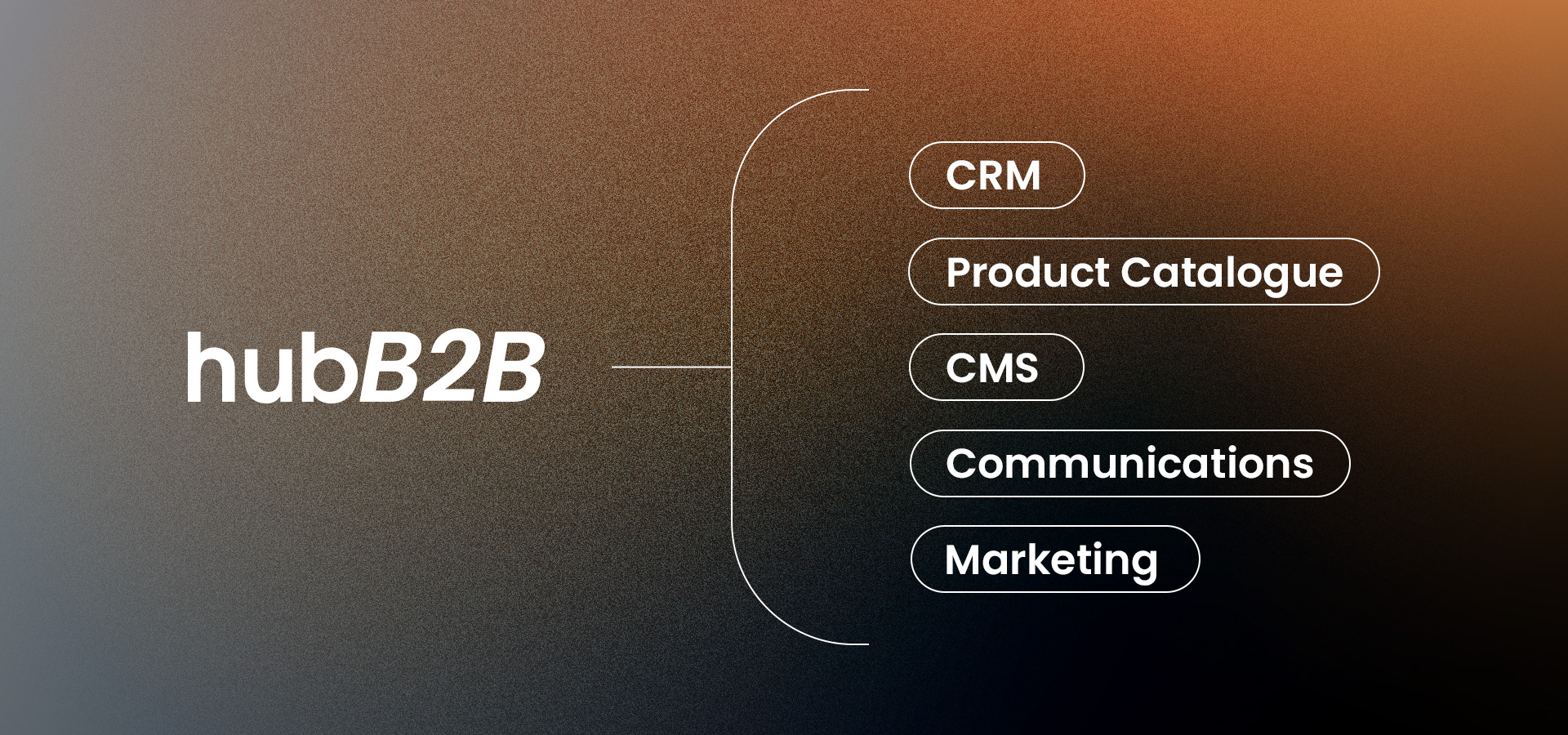
This isn’t a discipline problem. It’s an architecture signal. Tools are built in silos. Each one fulfills its function. None of them do yours. What’s missing is a central space — a place where the product catalog, the CRM, brand identity, and field needs converge in a single, simple action for the person doing the selling.
What we’re building
A custom commercial platform. Not a SaaS you configure. Not a template you fill in. An application built around the reality of the organization — its product structure, its networks, its internal workflows — that connects to existing systems and becomes the convergence point for sales teams.
The platform doesn’t replace anything. It connects what already exists.
And it’s designed to evolve. Every quarter, new capabilities are added, aligned with the team’s real priorities. We respect the learning curve. We make sure each addition is adopted before moving on to the next. Because a sales force’s needs in Q1 are never the same as in Q4 — and the tool has to be able to keep up.
What it changes, concretely
Across several of our clients, reps were juggling Salesforce, HubSpot or Microsoft Dynamics on one side, the product catalogue on the other, and marketing resources somewhere in between just to prepare for a single meeting. We built the platform that connects all of it.
A rep opens the app, selects products directly from the catalogue, generates a bilingual sheet tailored to their network, and walks into the client meeting with material calibrated for that specific audience. Without asking anyone for anything.
What we consistently see: marketing regains control over content and priorities. New reps are up and running in days, not weeks. The brand stays consistent because consistency is built into the architecture, not into individual discipline.
And you?
Maybe the challenge is the complexity of your catalog ?
Maybe it’s onboarding that takes too long ?
Maybe it’s marketing that can no longer do strategy because they’re producing documents all day ?
The starting point varies. The underlying question is the same.
Are your tools working for your sales force, or is your sales force working for your tools?
That’s what we look at together.